Artificial Intelligence (AI) is no longer a futuristic concept—it’s here, and it’s reshaping the way organizations manage their people. From recruitment to employee engagement, performance management to workforce planning, AI is revolutionizing HR functions at an unprecedented pace.
Just look: 92% of companies plan to increase their AI investments in the next three years, and 65% of workers are optimistic about having AI-powered co-workers. These statistics underscore the growing role of AI in creating smarter, more efficient, and more inclusive workplaces.
The impact of AI goes beyond efficiency. It’s about transforming the employee experience, reducing bias, and unlocking new levels of productivity. AI-powered recruitment software tools can reduce recruitment costs by up to 30%, while predictive AI can anticipate employee turnover with 87% accuracy.
As we look ahead to 2025, the integration of AI in HR is expected to deepen, with 80% of organizations projected to use AI for workforce planning and 70% of employees expecting personalized AI-driven career development plans. The future of work is being written today, and AI is at the heart of it.
AI Adoption and Workforce Transformation
- 45% of organizations currently use AI in HR functions. (Source)
- 38% of organizations plan to use AI in HR in the future. (Source)
- 17% of organizations do not plan to use AI in HR. (Source)
- 50% of workers globally use some form of AI at work. (Source)
- 21% is the current global AI adoption rate for HRM. (Source)
- 65% of HR professionals believe AI positively impacts HR functions. (Source)
- 31% of HR professionals report a mixed impact of AI on HR functions. (Source)
- 4% of HR professionals feel AI has no significant impact on HR functions. (Source)
- 92% of companies plan to increase AI investments in the next three years. (Source)
- Only 1% of companies consider their AI deployment fully mature. (Source)
- 47% of C-suite executives believe their organizations are implementing AI too slowly. (Source)
- 65% of workers are optimistic about having AI-powered co-workers. (Source)
- By 2025, 80% of organizations will integrate AI into HR functions. (Source)
- AI adoption in HR is expected to grow by 35% annually through 2025. (Source)
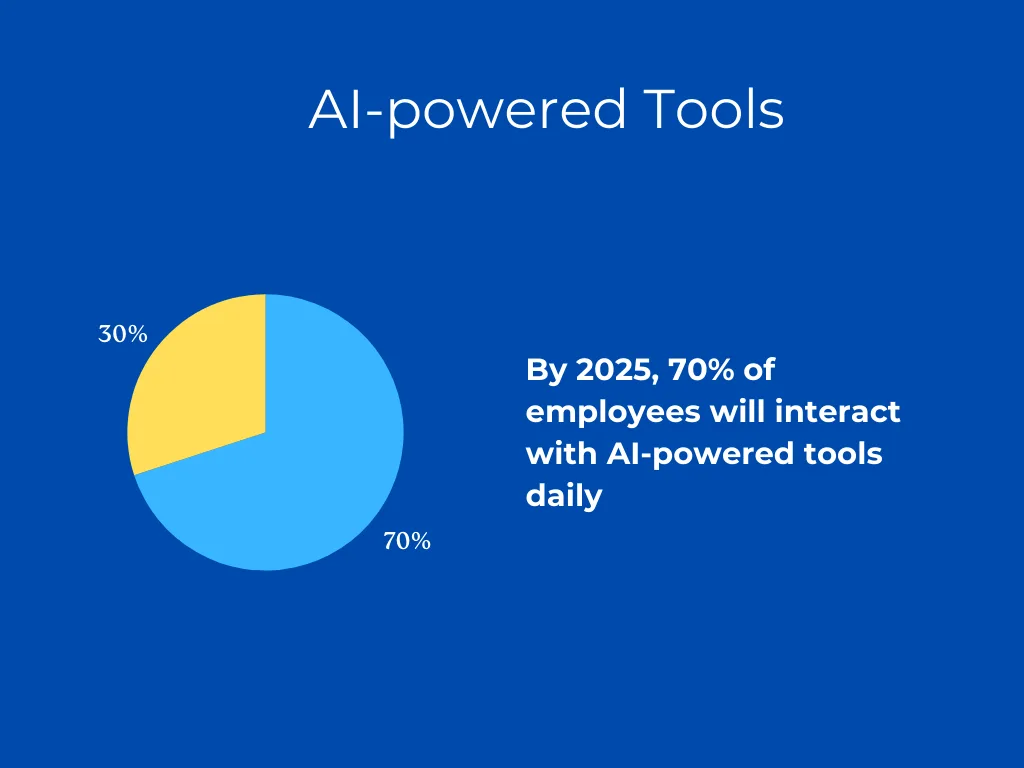
- By 2025, 70% of employees will interact with AI-powered tools daily. (Source)
- AI-driven workforce transformation will save companies $1.2 trillion globally by 2025. (Source)
AI in Recruitment and Talent Acquisition
- 44% of organizations use AI for recruitment and talent acquisition. (Source)
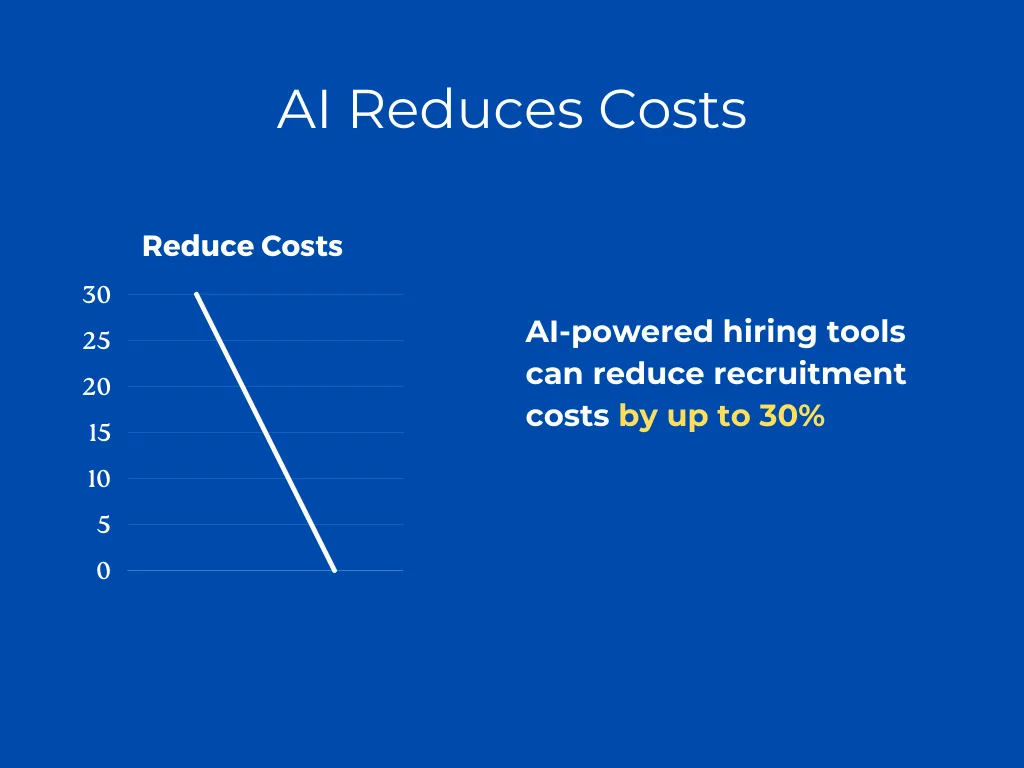
- AI-powered hiring tools can reduce recruitment costs by up to 30%. (Source)
- AI reduces time-to-hire by an average of 50%. (Source)
- 75% of recruiters say AI tools help speed up the hiring process by screening resumes faster. (Source)
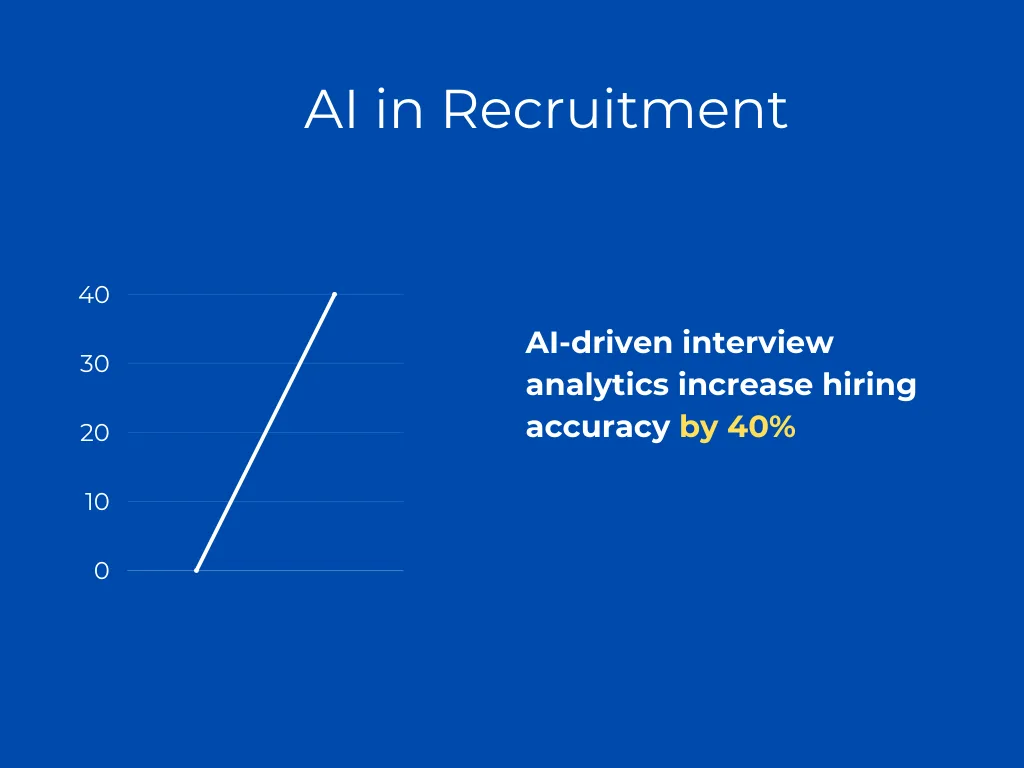
- AI-driven interview analytics increase hiring accuracy by 40%. (Source)
- Predictive analytics enhance talent matching by 67%. (Source)
- AI hiring tools improve workforce diversity by 35%. (Source)
- 58% of companies use AI for video interview analysis. (Source)
- 62% of job seekers are comfortable interacting with AI in the hiring process. (Source)
- 40% of job applications are screened out before human recruiters review them due to AI filtering. (Source)
- By 2025, 60% of organizations will use AI for end-to-end recruitment processes. (Source)
- AI-powered hiring tools will reduce recruitment bias by 50% by 2025. (Source)
- By 2025, 75% of job seekers will prefer AI-driven recruitment processes for faster feedback. (Source)
- AI will automate 40% of repetitive recruitment tasks by 2025. (Source)
AI in Employee Engagement and Retention
- 52% of organizations use AI for employee engagement and satisfaction. (Source)
- 65% of employees feel more engaged when AI is used in HR processes. (Source)
- 59% of HR employees are technically adept at using AI functions. (Source)
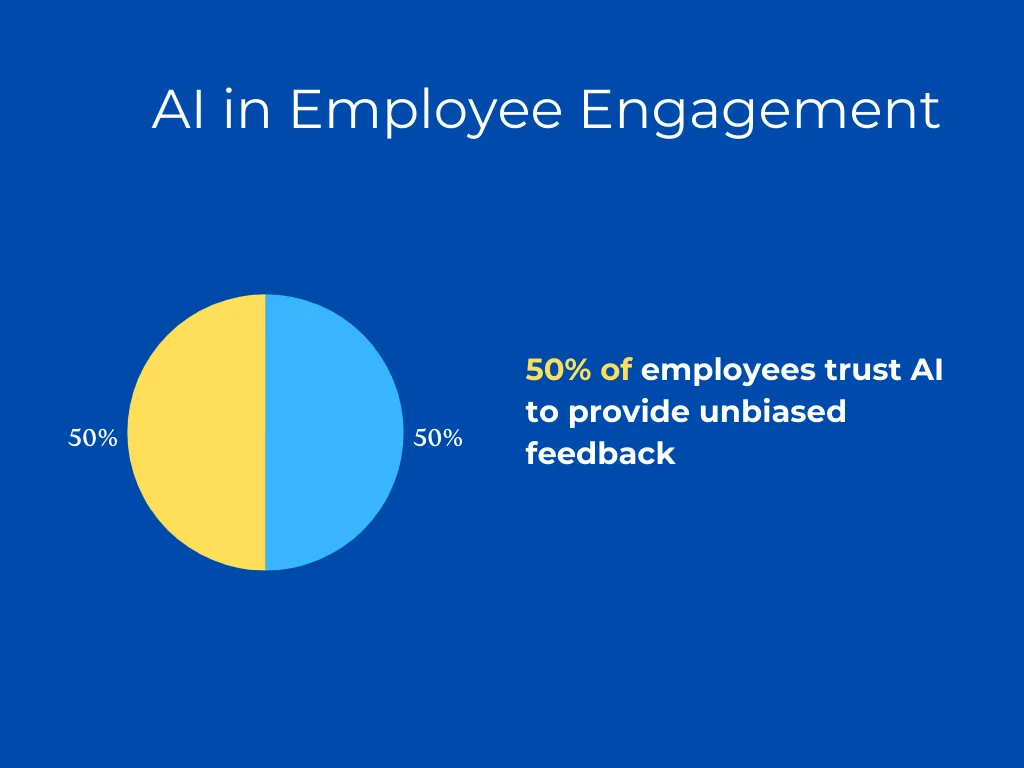
- 50% of employees trust AI to provide unbiased feedback. (Source)
- AI-powered engagement surveys boost response rates by 45%. (Sources)
- Predictive AI can anticipate employee turnover with 87% accuracy. (Source)
- AI-driven sentiment analysis identifies disengaged employees 30% faster. (Source)
- AI-based wellness programs reduce employee stress by 25%. (Source)
- AI-driven recognition programs increase employee satisfaction by 33%. (Source)
- Personalized AI-driven career pathing increases retention by 20%. (Source)
- AI-powered internal mobility tools reduce attrition by 35%. (Source)
- By 2025, 70% of organizations will use AI to predict and prevent employee turnover. (Source)
- AI-driven engagement tools will increase employee retention rates by 25% by 2025. (Source)
- By 2025, 80% of employees will expect personalized AI-driven career development plans. (Source)
- AI-powered wellness programs will reduce burnout rates by 30% by 2025. (Source)
AI in Training and Development
- 50% of organizations use AI for training and development. (Source)
- AI-driven training increases employee engagement by 72%. (Source)
- AI-powered learning tools improve knowledge retention by 60%. (Source)
- 75 million jobs will be displaced by automation by 2022. (Source)
- 133 million new jobs will be created by automation by 2022. (Source)
- AI-based training modules improve employee engagement by 40%. (Source)
- AI-driven coaching improves employee productivity by 35%. (BetterUp, 2023)
- AI-powered skills assessment tools improve training efficiency by 45%. (Source)
- 68% of HR leaders plan to increase AI investment in training & onboarding. (Source)
- By 2025, 60% of corporate training programs will be AI-driven. (Source)
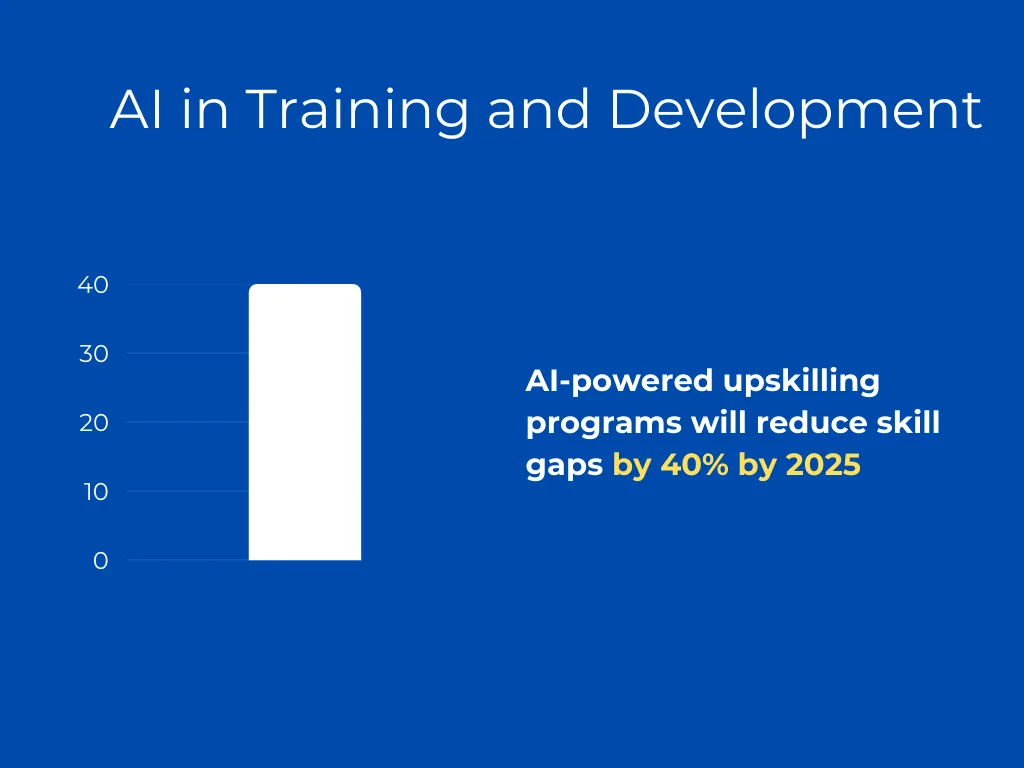
- AI-powered upskilling programs will reduce skill gaps by 40% by 2025. (Source)
- By 2025, 50% of employees will use AI-driven coaching tools for career development. (Source)
- AI will create 97 million new jobs in training and development by 2025. (Source)
AI in Performance Management
- 58% of organizations use AI for performance management. (Source)
- 65% of HR professionals believe AI improves performance management efficiency. (Source)
- AI-driven performance tracking improves productivity by 22%. (Source)
- AI reduces bias in performance reviews by 25%. (Source)
- AI-based evaluations predict leadership potential with 80% accuracy. (Source)
- AI-powered performance tracking reduces HR workload by 50%. (Source)
- AI-driven sentiment analysis detects disengagement 25% faster. (Source)
- AI-generated feedback increases performance improvement rates by 40%. (Source)
- By 2025, 70% of organizations will use AI for real-time performance tracking. (Source)
- AI-driven performance reviews will reduce bias by 50% by 2025. (Source)
- By 2025, 60% of employees will receive AI-generated feedback weekly. (Source)
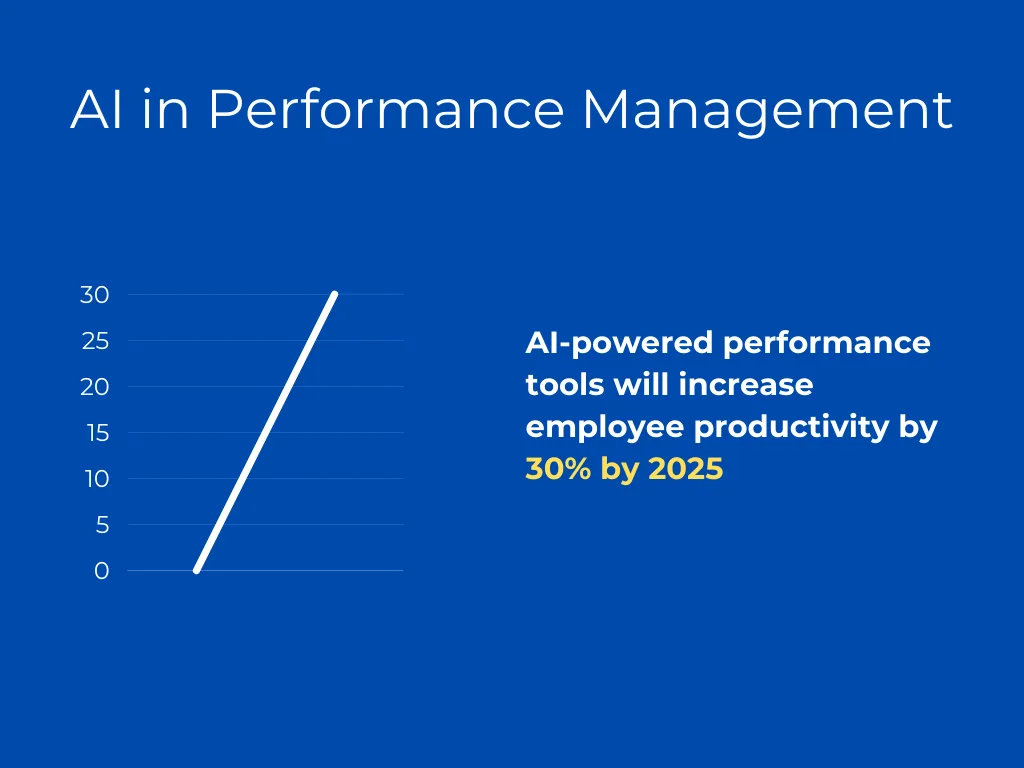
- AI-powered performance tools will increase employee productivity by 30% by 2025. (Source)
AI in Workforce Planning & HR Analytics
- 72% of HR professionals believe AI improves workforce planning. (Source)
- AI-powered HR analytics can predict workforce trends with 90% accuracy. (Source)
- AI-driven predictive scheduling reduces labor costs by 18%. (Source)
- AI-driven workforce analytics improve efficiency by 40%. (Source)
- AI can forecast skills gaps three years in advance. (Source)
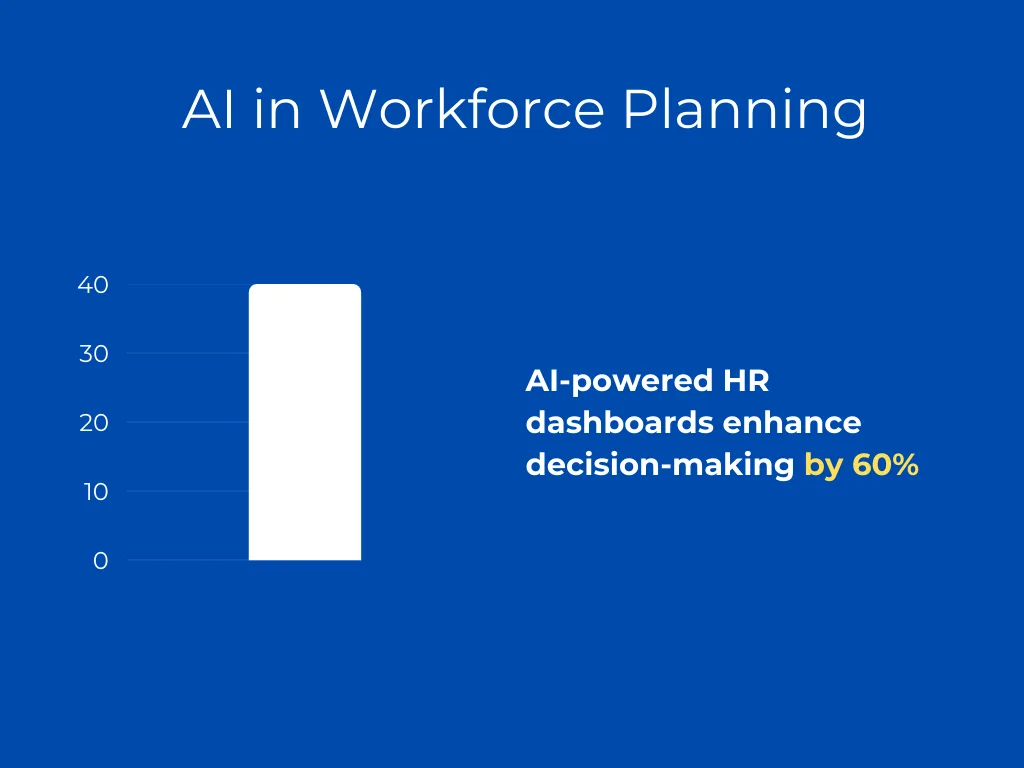
- AI-powered HR dashboards enhance decision-making by 60%. (Source)
- AI-based attrition models save companies millions in rehiring costs. (Source)
- AI-driven workforce optimization increases operational efficiency by 30%. (Source)
- By 2025, 90% of HR decisions will be supported by AI-driven analytics. (Source)
- AI-powered workforce planning will reduce hiring costs by 25% by 2025. (Source)
- By 2025, 80% of organizations will use AI to forecast skills gaps. (Source)
- AI-driven workforce optimization will save companies $500 billion globally by 2025. (Source)
AI in Compensation & Benefits
- AI-powered payroll systems reduce processing time by 70%. (Source)
- AI-driven compensation models improve pay equity by 30%. (Source)
- AI-based benefits personalization increases employee satisfaction by 40%. (Source)
- AI automates 90% of benefits administration tasks. (Source)
- AI-powered salary benchmarking increases competitiveness by 25%. (Source)
- Predictive analytics improve benefits utilization rates by 22%. (Source)
- AI-driven expense management reduces fraud by 50%. (Source)
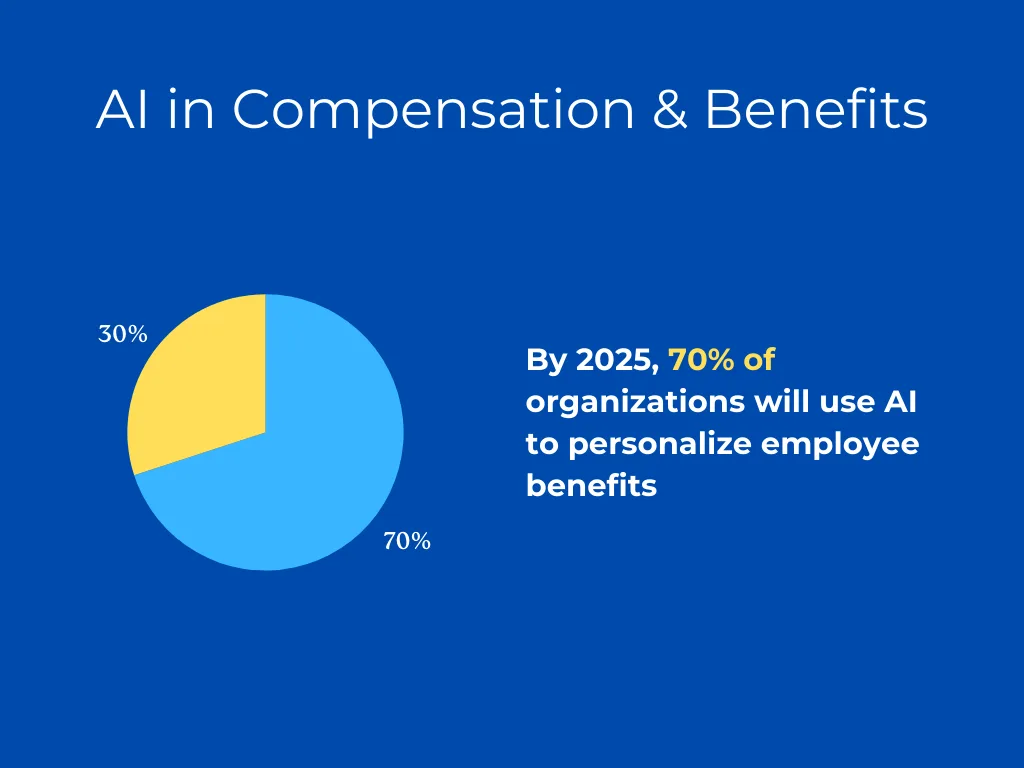
- By 2025, 70% of organizations will use AI to personalize employee benefits. (Source)
- AI-driven payroll systems will reduce errors by 90% by 2025. (Source)
- By 2025, 60% of employees will expect AI-driven salary benchmarking. (Source)
- AI-powered compensation tools will reduce pay gaps by 30% by 2025. (Source)
Ethical & Privacy Concerns in AI Adoption
- 67% of HR leaders prioritize ethical AI usage. (Source)
- 55% of HR professionals are concerned about AI data privacy. (Source)
- 78% of employees expect transparency in AI-driven HR decisions. (Source)
- AI bias in hiring has been detected in 36% of algorithms. (Source)
- 50% of employees cite cybersecurity as a major AI concern. (Source)
- 48% of employees worry about AI tracking their activities. (Source)
- By 2025, 80% of organizations will establish AI ethics committees. (Source)
- AI-driven privacy tools will reduce data breaches by 50% by 2025. (Source)
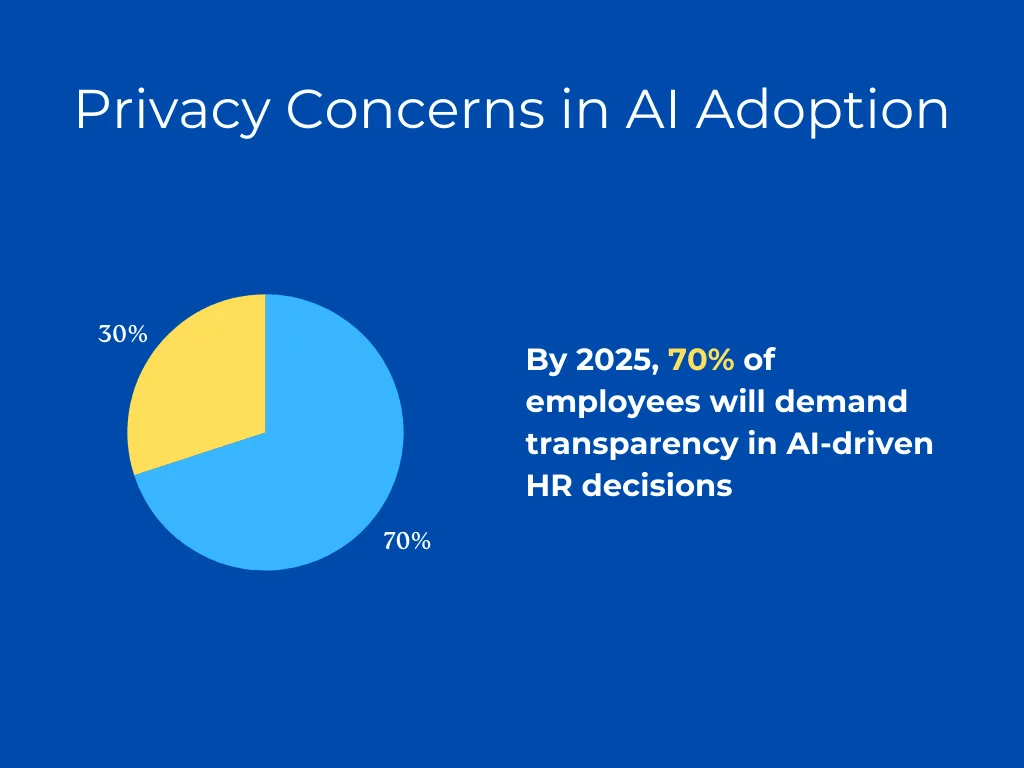
- By 2025, 70% of employees will demand transparency in AI-driven HR decisions. (Source)
- AI bias detection tools will reduce unfair practices by 40% by 2025. (Source)
Challenges in AI Implementation
- 47% of organizations struggle to integrate AI with existing systems. (Source)
- 33% of organizations lack AI knowledge and expertise. (Source)
- 50% of companies anticipate regulatory compliance challenges with AI. (Source)
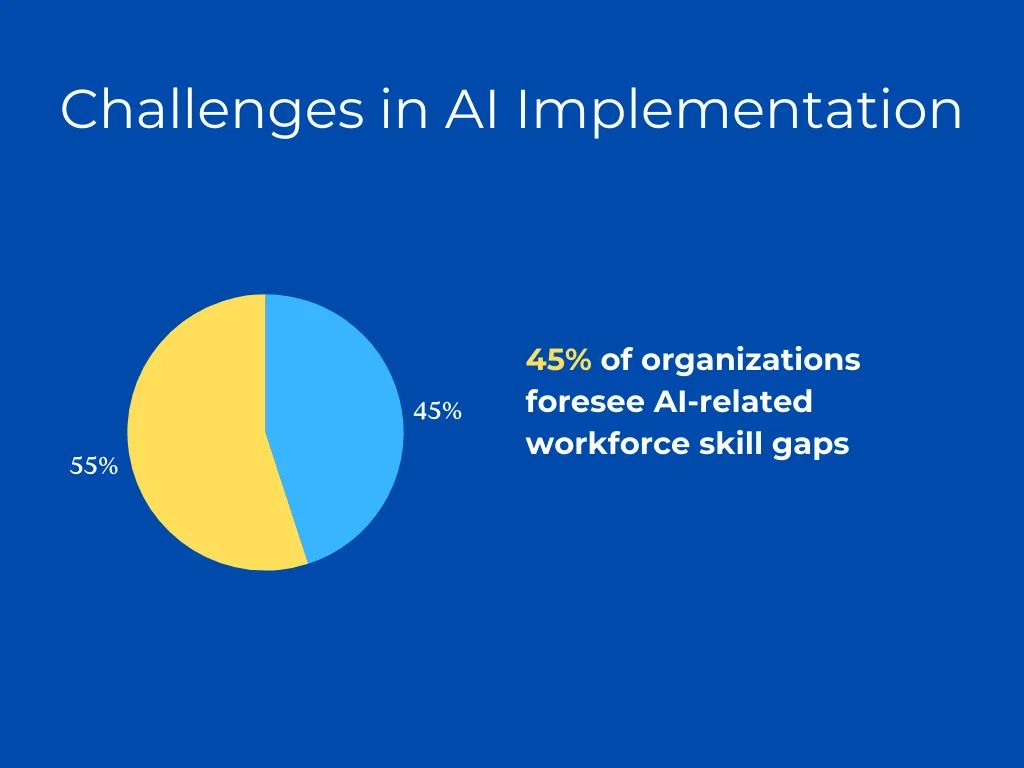
- 45% of organizations foresee AI-related workforce skill gaps. (Source)
- 44% of organizations worry about increased cybersecurity risks due to AI. (Source)
- 40% of organizations anticipate budget constraints in AI adoption. (Source)
- 86% of organizations have policies governing AI use in HR. (Souce)
- By 2025, 60% of organizations will face challenges in upskilling employees for AI adoption. (Source)
- 50% of companies will struggle with AI explainability and transparency by 2025. (Source)
- By 2025, 40% of organizations will face regulatory hurdles in AI implementation. (Source)
- AI implementation failures will cost companies $500 billion globally by 2025. (Source)
Future of AI in HR
- 58% of organizations believe AI will improve employee productivity in the next five years. (Source)
- 55% of organizations believe AI will enhance the employee experience in the next five years. (Souce)
- 53% of organizations believe AI will improve employee performance management in the next five years. (Source)
- 45% of organizations believe AI will improve employee development in the next five years. (Source)
- 31% of organizations believe AI will improve talent management in the next five years. (Source)
- By 2025, 90% of HR functions will be augmented by AI. (Source)
- AI will transform HR into a strategic function in 80% of organizations by 2025. (Source)
- By 2025, 70% of employees will believe AI enhances their work-life balance. (Source)
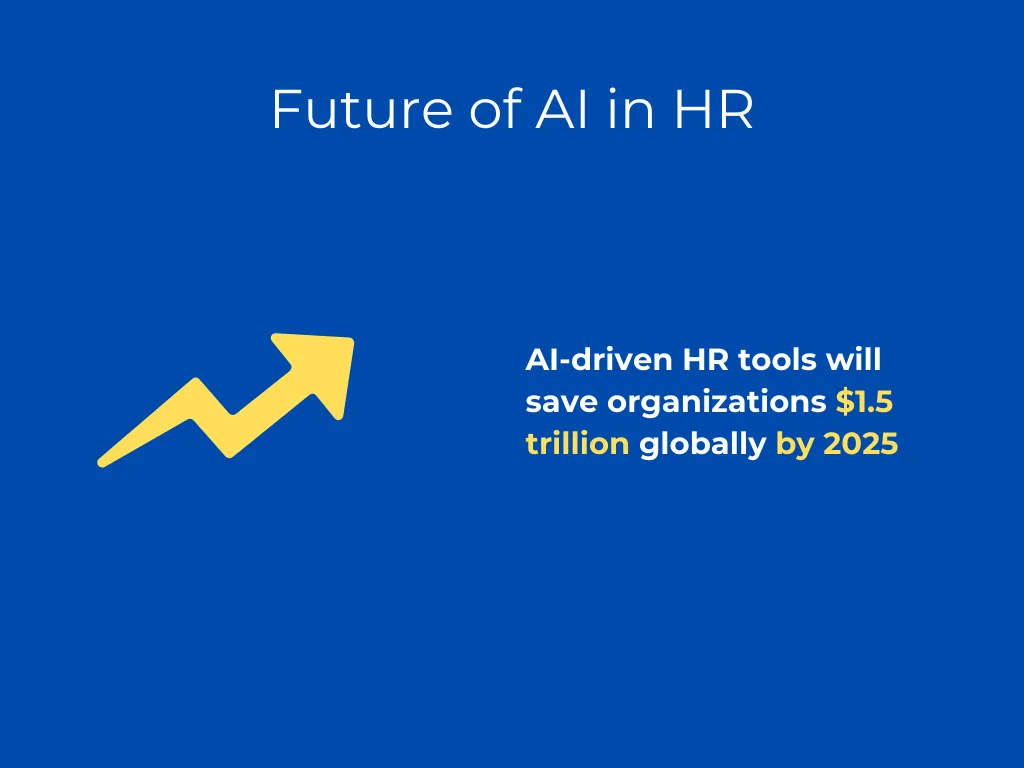
- AI-driven HR tools will save organizations $1.5 trillion globally by 2025. (Source)
References
- Deloitte. (2025). Global 2025 Predictions Report
- Deloitte UK. (2024). AI-Powered Employee Experience
- Engagedly. (2023). State of AI in HR 2023.
- Gartner. (2024). Artificial Intelligence in HR
- Harvard Business Review. (2025, February). How to Get Hired When AI Does the Screening
- IBM. (n.d.). AI Trends
- Ideal. (n.d.). Simple AI for Recruiting Guide
- Indian Muneem. (n.d.). The Rise of AI and Automation in Payroll Processing and Management
- LinkedIn Learning. (2023). Workplace Learning Report 2023
- McKinsey & Company. (2023). The State of AI in 2023: Generative AI’s Breakout Year
- MIT Sloan. (n.d.). How Generative AI Can Boost Highly Skilled Workers’ Productivity
- Oracle. (n.d.). AI in HR Whitepaper
- Payscale. (n.d.). How AI Will Transform HR Compensation in 2025 and Beyond
- Phenom. (n.d.). Recruiting AI Guide
- Psico-Smart. (n.d.). Artificial Intelligence and Automation in Recruitment
- PwC. (2024). Economic Outlook 2024 Q2
- ResearchGate. (n.d.). The Impact of AI-Driven Predictive Scheduling on Employee Engagement and Customer Satisfaction
- Vorecol. (n.d.). The Impact of AI and Machine Learning on Predictive Analytics in HR
- Workday. (2025, January 14). New Global Research on AI and Human Skills
- World Economic Forum. (2020, October). The Future of Jobs Report