Transparent Advancement for Every Employee
Promotion Paths: Career Ladders, Multi-Track Frameworks & Readiness Assessment
Design career ladders with clear promotion criteria, build multi-track frameworks for ICs and managers, and assess promotion readiness with gap analysis that drives purposeful development.
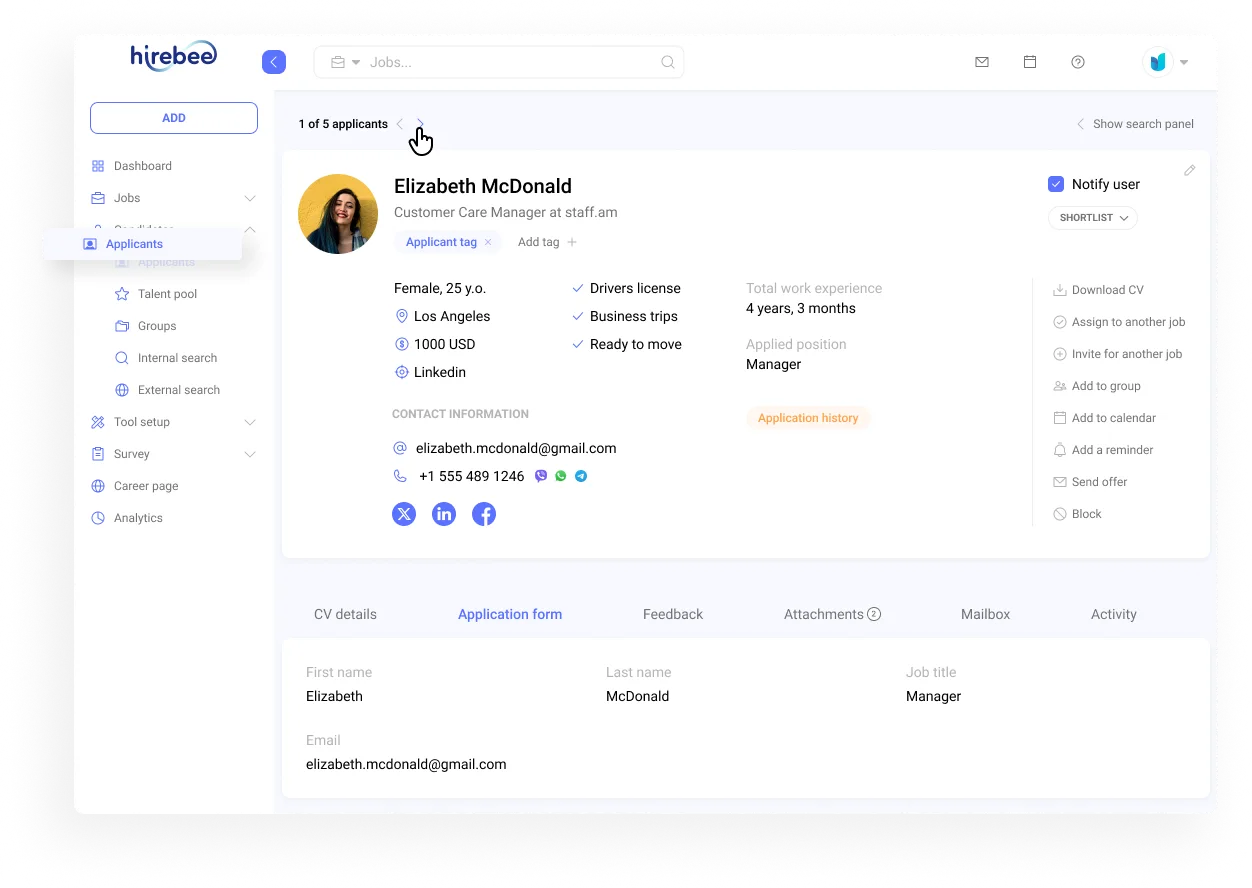
Hirebee is a highly recommended global hiring solution
Promotion Paths
Career Ladder Design and Promotion Criteria
Employees who don't know what promotion requires can't work toward it purposefully. Organizations that make promotion decisions based on undefined, subjective criteria create a system where advancement depends on visibility and manager favoritism rather than demonstrated capability — a system that consistently disadvantages employees who are excellent at their work but less skilled at self-promotion. Hirebee's career ladder design tools let HR teams and business leaders build explicit, documented career frameworks for every function and role family in the organization. Each level on the ladder is defined with specific promotion criteria: the skills that must be demonstrated, the scope of work expected, the impact level required, and the behavioral standards that distinguish one level from the next. Promotion criteria are written in behavioral terms that can be observed and evaluated rather than abstract traits that different assessors will interpret differently. Once defined and published, career ladders become a shared language between employees and managers — conversations about growth are grounded in the same documented framework rather than in each manager's individual interpretation of what constitutes readiness.
Multi-Track Career Frameworks for Individual Contributors and Managers
Traditional career frameworks implicitly treat management as the only path to advancement — senior individual contributors who don't want to manage people hit a ceiling and leave for organizations that value depth as much as breadth. Hirebee supports multi-track career frameworks that define parallel advancement paths: an individual contributor track that rewards deepening expertise and expanding scope without requiring management responsibility, and a management track that rewards leadership capability and organizational impact. Both tracks reach comparable levels of seniority, compensation, and organizational influence, ensuring that the most talented individual contributors have a reason to stay and grow rather than feeling forced into management roles they don't want. Custom tracks can be defined for any career architecture: technical specialist tracks, functional expert tracks, and cross-functional generalist tracks, each with their own progression criteria that reflect what mastery actually looks like in that context. Multi-track frameworks are increasingly expected by top talent, and organizations that offer them demonstrate a sophistication in talent development that enhances their employer brand.
Promotion Readiness Assessment and Gap Identification
The space between where an employee is today and where they need to be for promotion is the development agenda. Hirebee's promotion readiness assessment compares each employee's current skill ratings and performance evidence against the criteria for the next level in their career track, producing a readiness score that shows both the employee and their manager exactly how close they are to promotion and where the remaining gaps lie. Gap analysis is specific rather than generic: not "needs to improve leadership" but "needs to demonstrate cross-functional stakeholder management on a project with three or more departments" — a concrete development target that the employee can pursue with purpose. Readiness assessments are updated after each performance review cycle, providing an updated picture of progress toward promotion that motivates continued development and gives managers objective data to support or defer promotion decisions. When multiple employees on the same team are approaching promotion readiness simultaneously, workforce planning visibility prevents the surprise promotions that strain compensation budgets.
Career Path Visibility and Employee Self-Service
Career frameworks only change behavior if employees can see them. When career ladders are locked in an HR document that employees never access, they might as well not exist. Hirebee publishes career frameworks in the employee self-service portal where every employee can explore the paths available to them, understand what advancement requires, and see their own position on the framework relative to the next level. Career path exploration tools let employees browse paths in other functions — not just their current track but adjacent tracks they might transition into — supporting informed internal mobility decisions rather than external job searches motivated by a desire for change. Managers have visibility into each team member's career path aspirations and current readiness, enabling career conversations that are grounded in data rather than relying on the manager's memory of previous conversations. Career path transparency is one of the most frequently cited factors in employee engagement surveys — when employees feel they have a future at the organization, they invest in it more fully.

Ready to see it in action?
Join 1,000+ companies using Hirebee. Start your free trial — no credit card required.